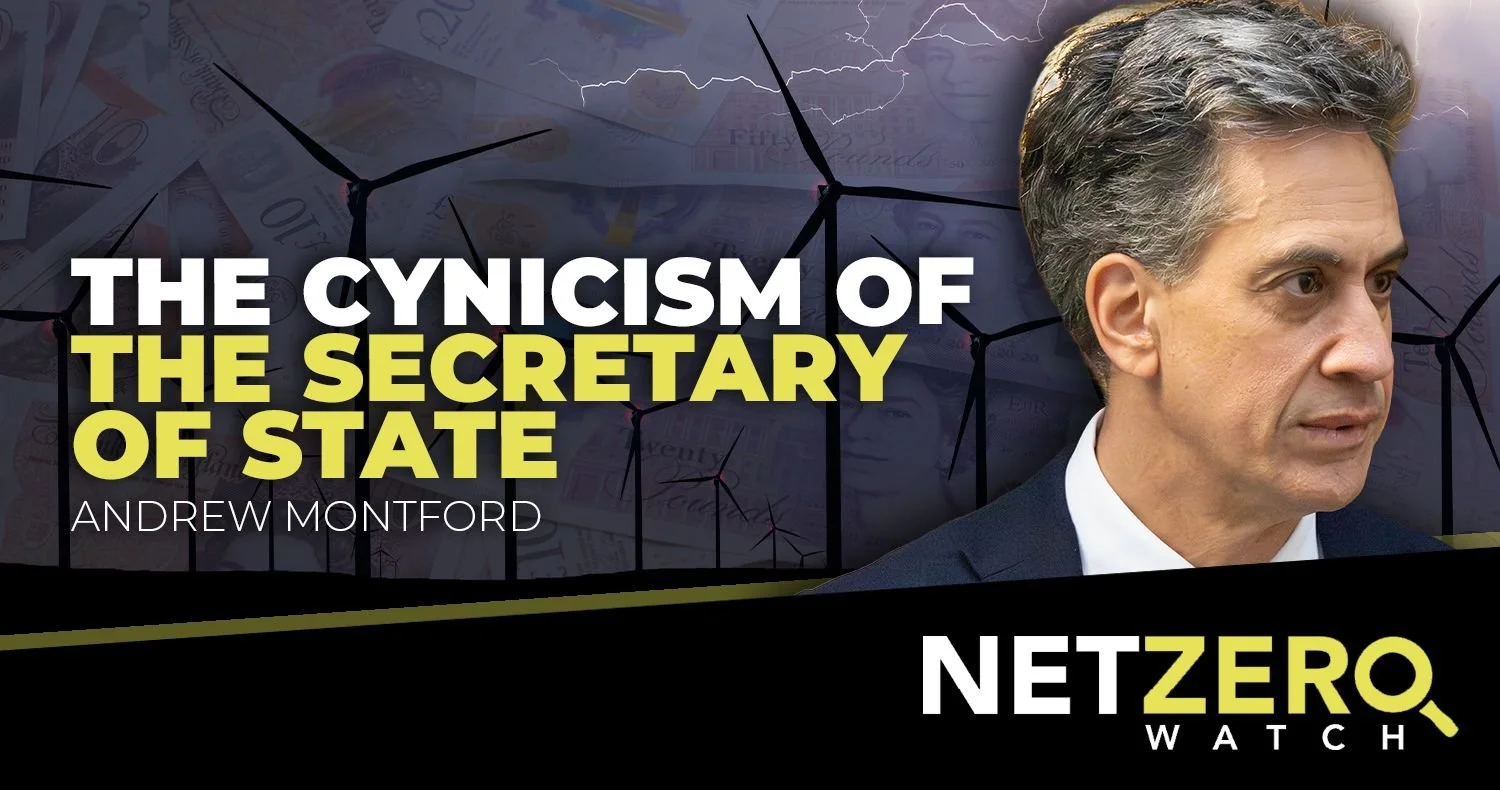
UKNet Zero Watch: we need a Coal Power 2030 missionBritain faces an electricity capacity crunch, because we will soon lose much of our gas-fired fleet. Replacements - either nuclear or gas - will arrive too late. A new paper by Andrew Montford explains that the only option is coal. Politicians will need to come to terms with this painful fact. READ ANDREW’S OP-ED ‘THE CASE FOR COAL’ FOR THE CRITIC HERE WATCH OUR SHORT AI VIDEO EXPLAINER HERE Miliband defies Starmer over budget cuts Ed Miliband has successfully resisted pressure from Sir Keir Starmer to cut spending in his department amid a Cabinet row about how to fund defence. The ultimatum from No 10 would have forced Mr Miliband to cut spending on net zero schemes by hundreds of millions of pounds, including support for heat pumps, carbon capture and hydrogen production. The PM was reportedly eyeing even greater cuts to net zero expenditure, where £9bn alone is set to be spent on controversial carbon capture and storage – a technology that has never been commercially proven. The row has resulted in two respected defence ministers resigning from Starmer’s government. One of the former Ministers, Al Carns, has been on the offensive today calling for cheaper energy and a new approach to energy policy. The former Royal Marine is rumoured to be running as the next leader of the Labour Party. EDF boss: stop building wind farmsBritain should stop building wind farms because the country has too much electricity, the UK boss of EDF Energy has said. The energy giant’s boss said Miliband’s expansion of wind and solar power was creating far more electricity generation capacity than needed, meaning the UK needs to build twice the transmission grid. All at high fixed costs and resulting in taxpayers increasingly having to pay to switch off turbines at times when the grid cannot handle their power.Burnham wavers on Net Zero MPs to vote on the Seventh Carbon BudgetMPs will get a greater say over Britain’s next net zero target after ministers agreed to pressure from the Environmental Audit Committee. The Government has accepted the call for a half-day debate before Parliament agrees the Seventh Carbon Budget. That is a major shift in scrutiny. The previous Carbon Budget received just 17 minutes of debate in a Commons committee room, despite setting legally binding emissions limits that shape energy, transport, heating and industry policy. READ MAURICE COUSINS’ POST ON CB7’S IMPACT ON MEAT AND DAIRY HERE.
|